
The NDIS Home and Living Option
Most Families Have Never Had Explained
A group home is too much. Living completely alone is too much the other way.
There's something in between, and almost nobody talks about it.

Is Your Neurodivergent Young Adult Ready to Build a Life of Confidence, Independence, and True Belonging?
Discover the NDIS-Funded SILS Program — a Proven Pathway to Real Growth, Real Skills, and Real Freedom — Without You Burning Out.
The Gap
Here's the situation we hear almost every week on the Sunshine Coast.
An adult son or daughter is still living at home. They don't need round-the-clock support in a shared house, so supported independent living feels like too much. But living entirely on their own isn't realistic either, at least not yet.
So nothing happens. Everyone waits. And the person in the middle who is usually more capable than anyone gives them credit for, stays exactly where they are.
Individualised Living Options exists for precisely this gap.
What ILO Actually Is?
ILO is a type of NDIS home and living support. The important thing to understand is what it funds: the supports around a person, not the house itself.
It doesn't pay rent, a mortgage, or utilities. What it does is build a package of support around where you've chosen to live and who you've chosen to live with, blending paid support with the help that already comes from family, friends and community.
That's the difference from every other option. Instead of fitting a person into an existing arrangement, the arrangement gets designed around the person.
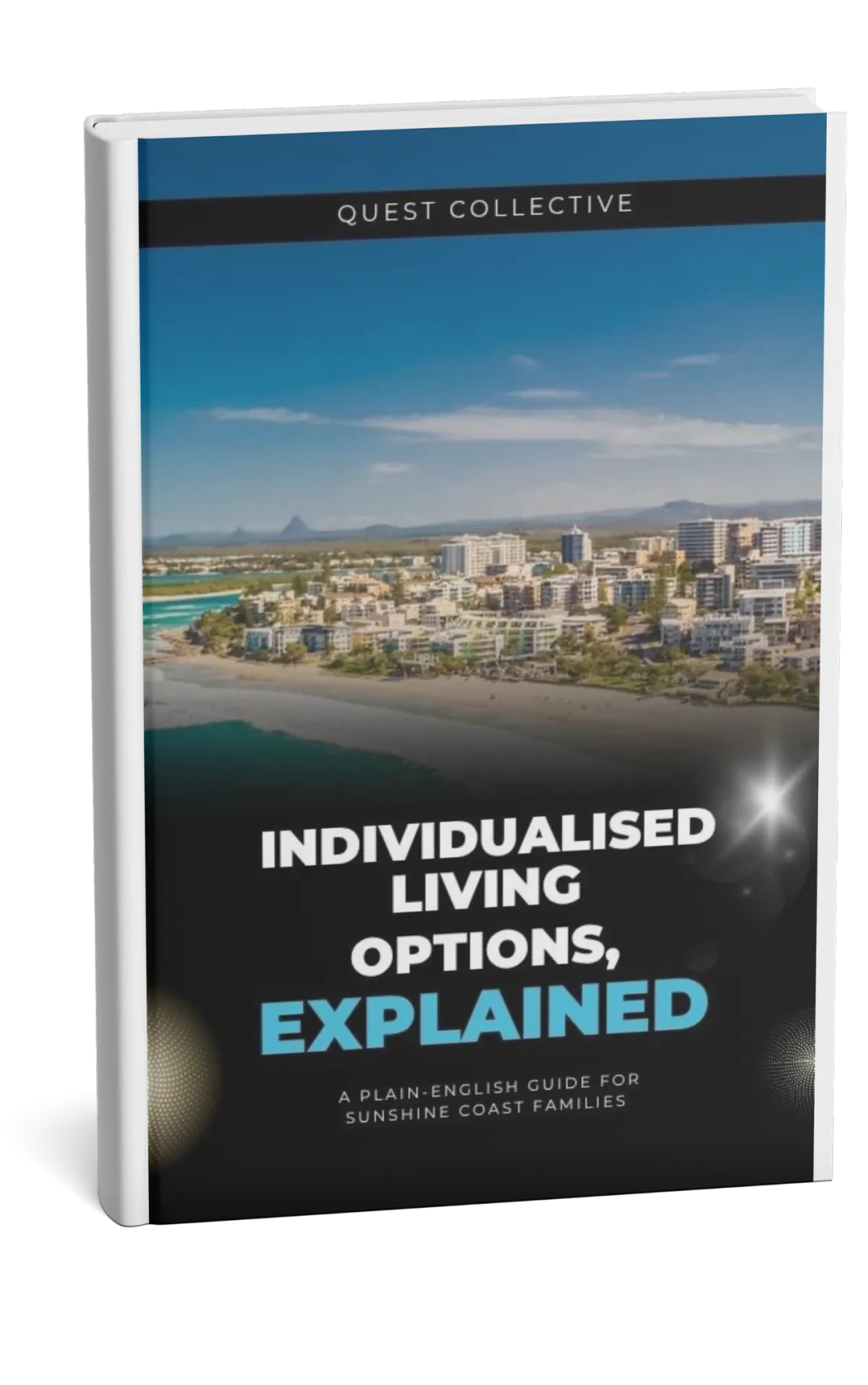
The Two Stages
ILO funding comes in two stages, and this is the part that surprises people.
Stage 1 — Exploration and design.
Before anyone moves anywhere, the NDIS can fund a piece of work to figure out what would actually work. Where you'd want to live. Who with. What support would make it sustainable. Who's already in your corner. It ends with a proposal to the NDIS.
Stage 2 — Supports.
Putting the arrangement in place and running it, adjusting as things change.
Stage 1 is the easy first step. You're not committing to moving.
You're not committing to anything.
You're being properly asked a question most people have never been asked: where do you actually want to live?
What it can Look Like?
Your own place, with support that comes to you.
A unit or a small house, with mentors dropping in for the parts of the week that need it.
A share house you chose.
A unit or a small house, with mentors dropping in for the parts of the week that need it.
Living with a host.
Someone else's home, where a household takes you in and support is built around that.
There isn't a template. That's the whole point of it.
STILL NOT SURE?
Frequently Asked Questions
Question 1: Can I have ILO and SIL at the same time?
No. They're alternatives. A person can move between them if their needs change, but not hold both.
Question 2: Do I have to move house?
No. Stage 1 is about working out what would suit. Plenty of people go through exploration and design and decide to change something about their current arrangement rather than move.
Question 3: What if I don't know what I want yet?
That's the most common starting point, and it's exactly what Stage 1 is designed for.
Question 4: Does ILO pay the rent?
No. It funds the supports around you, not housing costs.
Question 5: How do I ask about it?
Talk to your support coordinator, LAC or planner about your home and living goals. Our guide covers how to start that conversation.
Want to chat with us about ILO?
Follow Us:


©2025 by Quest Collective. All Rights Reserved
Privacy Policy & Website Terms of Use | Terms of Use & Refunds Policy